

Hip Arthritis Causes, Symptoms & Treatment Options
Hip arthritis is a degenerative joint condition characterized by the breakdown of the lining of the joint(articular cartilage), leading to pain, stiffness, and reduced mobility. Common causes include osteoarthritis, rheumatoid arthritis, and post-traumatic injury. Progressive cartilage loss results in inflammation and joint deformity, often requiring conservative management or surgical intervention for symptom relief.
Start with our quick Symptom Assessment or connect directly with an Upswing Coach today.
Request an AppointmentReady to take the next step?
Start your symptom assessment or connect with a coach instantly.
Find Relief TodayOverview
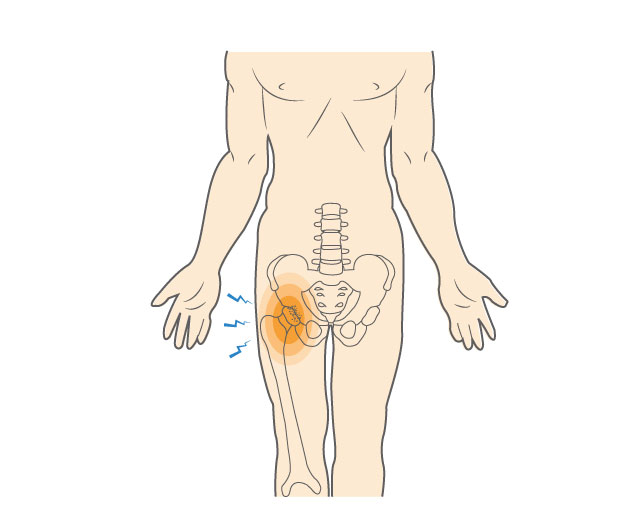
The hip functions as a “ball and socket” joint, where the rounded head of the femur (thigh bone) fits into the acetabulum of the pelvic bone. The femoral head, acting as the ball, moves smoothly within the socket, aided by a specialized cartilage that lines both surfaces. This firm, rubber-like tissue minimizes friction and allows effortless motion.
Hip arthritis, or hip osteoarthritis (OA), is a degenerative condition that affects millions of middle-aged and older adults. It develops when the joint’s protective cartilage deteriorates, eventually exposing the underlying bone. This leads to pain, stiffness, and inflammation that worsen over time. In athletes, hip OA can significantly hinder mobility and athletic performance.
What causes Hip arthritis?
Multiple factors can contribute to the onset and progression of hip osteoarthritis (OA). These include advancing age, family history, obesity, and congenital or developmental abnormalities affecting the hip joint. Prior injuries and repetitive stress, especially from high-impact or collision sports, also increase susceptibility.
- How the Injury Occurs: Hip arthritis develops gradually as the protective cartilage wears away, increasing friction between bone surfaces. Over time, inflammation and stiffness worsen, making movement painful and restricted.
- Common Everyday Causes: Hip arthritis can also develop in individuals with physically demanding occupations, such as construction workers, military personnel, or farmers, due to repetitive lifting, squatting, or standing. Additionally, sedentary lifestyles and obesity can accelerate joint degeneration by reducing circulation and increasing mechanical stress on the hips.
Hip arthritis is more common in these sports:
- Soccer: Frequent pivoting, sudden direction changes, and high joint load accelerate cartilage wear.
- Hockey: Repetitive hip rotation and impact from skating motions strain the joint over time.
- Football: Forceful tackles and abrupt movements place repetitive stress on the hip joint.
- Lacrosse: Continuous running and twisting motions heighten joint stress and potential cartilage breakdown.
- Long-Distance Running: Repeated impact on hard surfaces contributes to gradual cartilage degeneration.
- Tennis: Rapid lateral movements and sudden stops add pressure and friction within the hip joint.

Symptoms
The primary symptom of hip arthritis is groin pain that worsens with physical activity. The discomfort often begins gradually and intensifies over time. Additional common symptoms include:
- Stiffness: Most noticeable after waking up or following long periods of sitting.
- Limping: Difficulty walking smoothly due to pain or restricted motion.
- Limited Flexibility: Challenges in daily tasks such as putting on shoes, socks, or trimming toenails.
- Reduced Athletic Ability: Decreased comfort and mobility when engaging in sports or physical exercise.

When to see a doctor
If you experience hip pain lasting longer than a few weeks, it’s important to consult a doctor. During the evaluation, your physician will review your medical history, discuss your symptoms and activity level, and perform a physical examination to assess movement, stiffness, and pain triggers. Imaging studies, such as X-rays or MRI scans, may be recommended to identify any underlying damage or degeneration within the hip joint.

Non-operative treatment
In most cases, your doctor will first recommend non-surgical treatments to manage osteoarthritis of the hip and its symptoms. Hip arthritis pain treatment options could include:
- Substituting high-impact sports that can aggravate and stress the hip (e.g., jogging) with low-impact sports (e.g., swimming, bicycling)
- Nonsteroidal anti-inflammatory (NSAID) medication like ibuprofen
- Losing weight to achieve the ideal body weight requires less stress on the hip joint.
- Physical therapy stretches and exercises to strengthen muscles around your hip joint.
- Occasionally, Corticosteroids are administered via injection to reduce inflammation and pain in the joint.
Try these exercises to help address your condition:
Below is a PDF of the Exercise Program

Surgical Treatment
If conservative treatments fail to provide adequate relief, your doctor may recommend surgical intervention for managing hip arthritis. Common surgical options include:
- Total Hip Replacement: This procedure replaces the damaged femoral head with a metal or ceramic ball and resurfaces the acetabulum using a metal shell and a polyethylene liner. Most modern implants are placed without cement, offering improved durability and long-term stability.
- Hip Resurfacing: Hip resurfacing is a bone-preserving alternative to total hip replacement, typically recommended for younger, active patients with strong bone quality. In this procedure, the damaged surface of the femoral head is trimmed and capped with a smooth metal covering, while the acetabulum (hip socket) is fitted with a metal cup. Unlike a total hip replacement, the femoral head and much of the femur are retained, allowing for a more natural load distribution and easier revision if needed in the future.

Recovery
Recovery following hip surgery depends on the type of procedure performed and the individual’s activity level. Some athletes can resume their sport at full capacity after rehabilitation, though recovery timelines vary. Most patients require several months of healing, temporary use of a cane, and structured physical therapy to restore strength and mobility. Consultation with your surgeon and physical therapist is essential to determine a safe and effective return-to-sport plan.

Dr. Jay Kimmel is a board-certified orthopedic surgeon specializing in sports medicine, arthroscopic surgery, and shoulder and knee disorders. He completed his orthopedic training at New York-Presbyterian/Columbia University Medical Center and a Sports Medicine Fellowship at Temple University.
Dr. Kimmel previously served as the Director of the Connecticut Sports Medicine Institute at Saint Francis Hospital and has held faculty appointments as Clinical Assistant Professor in the Departments of Orthopedics and Family Medicine at the University of Connecticut. He has extensive experience caring for athletes as a team physician for high school and collegiate programs and continues to teach in the athletic training departments at Westfield State University and Springfield College.
Find the Support You Need — Right When You Need It
Whether you’re managing pain for the first time, need ongoing guidance, or require expert medical care, we’re here to help you every step of the way.
ORTHO DIRECT
Video visit with an orthopedic doctor for advice and a care plan.
$30
/MonthMRI DIRECT
Fast, affordable MRI with orthopedic review. No insurance required.
$499
/MonthFrequently Asked Questions
How effective is hip replacement surgery?
Hip replacement has a high success rate, significantly reducing pain and restoring mobility for most patients, allowing them to return to normal activities and even low-impact sports.
Is exercise safe if I have hip arthritis?
Yes, low-impact exercises like swimming, cycling, and yoga help maintain flexibility and joint strength without overloading the hip.
How long does recovery take after surgery?
Recovery varies by individual, but most patients notice steady improvement within 3–6 months with proper rehabilitation and medical guidance.
Can hip arthritis be prevented?
While not always preventable, maintaining a healthy weight, staying active, and avoiding repetitive hip strain can reduce the risk of developing arthritis.